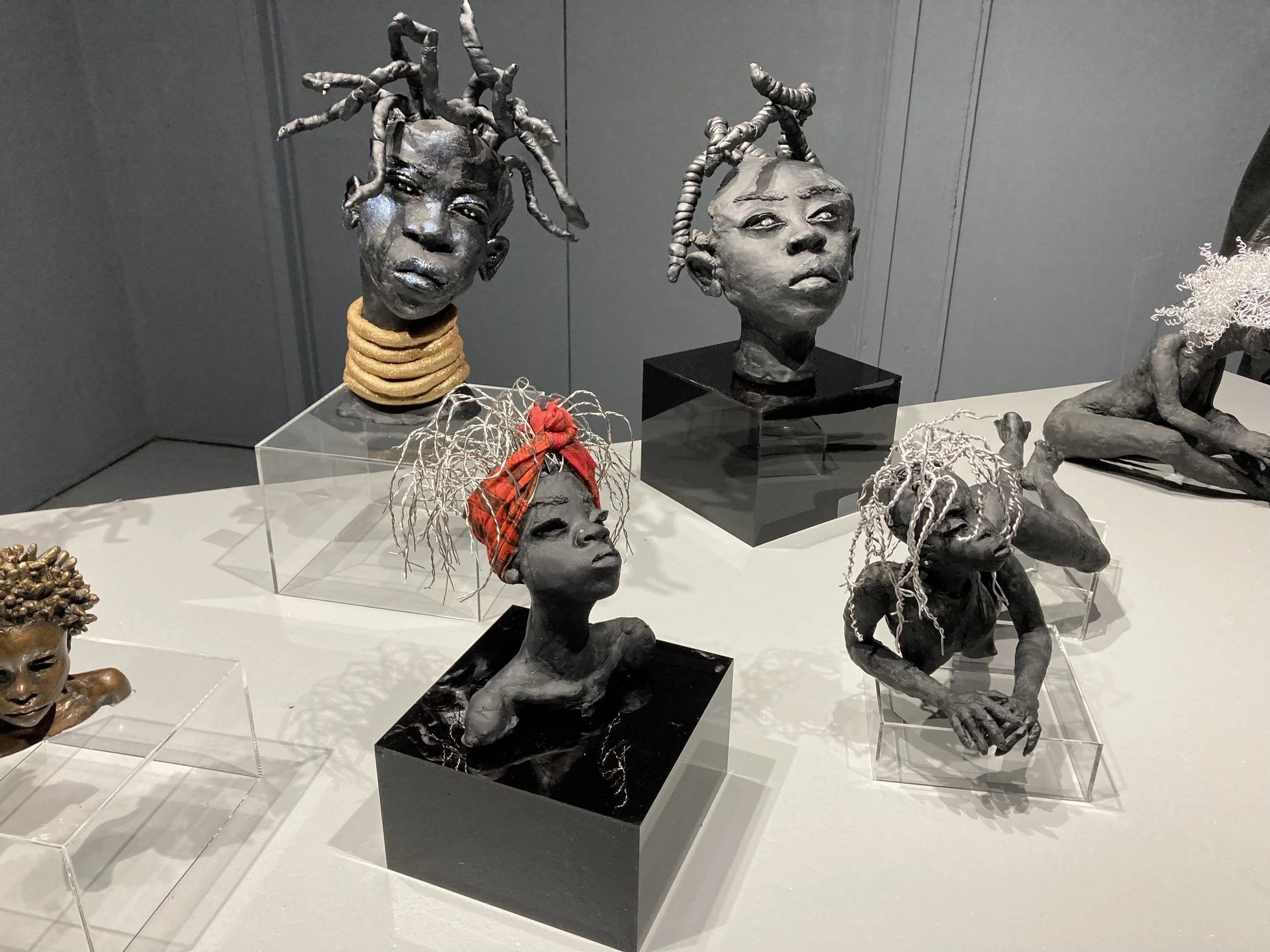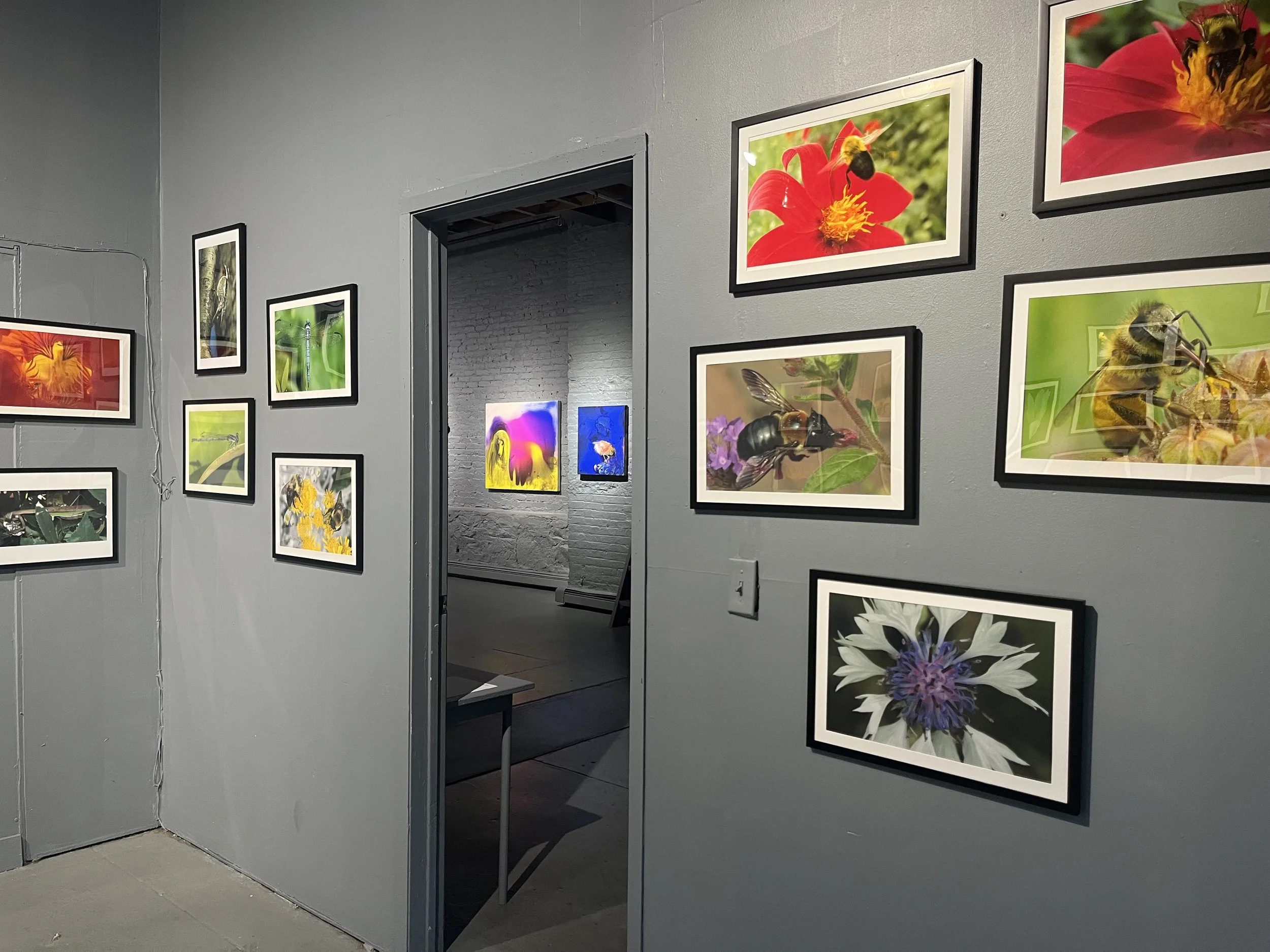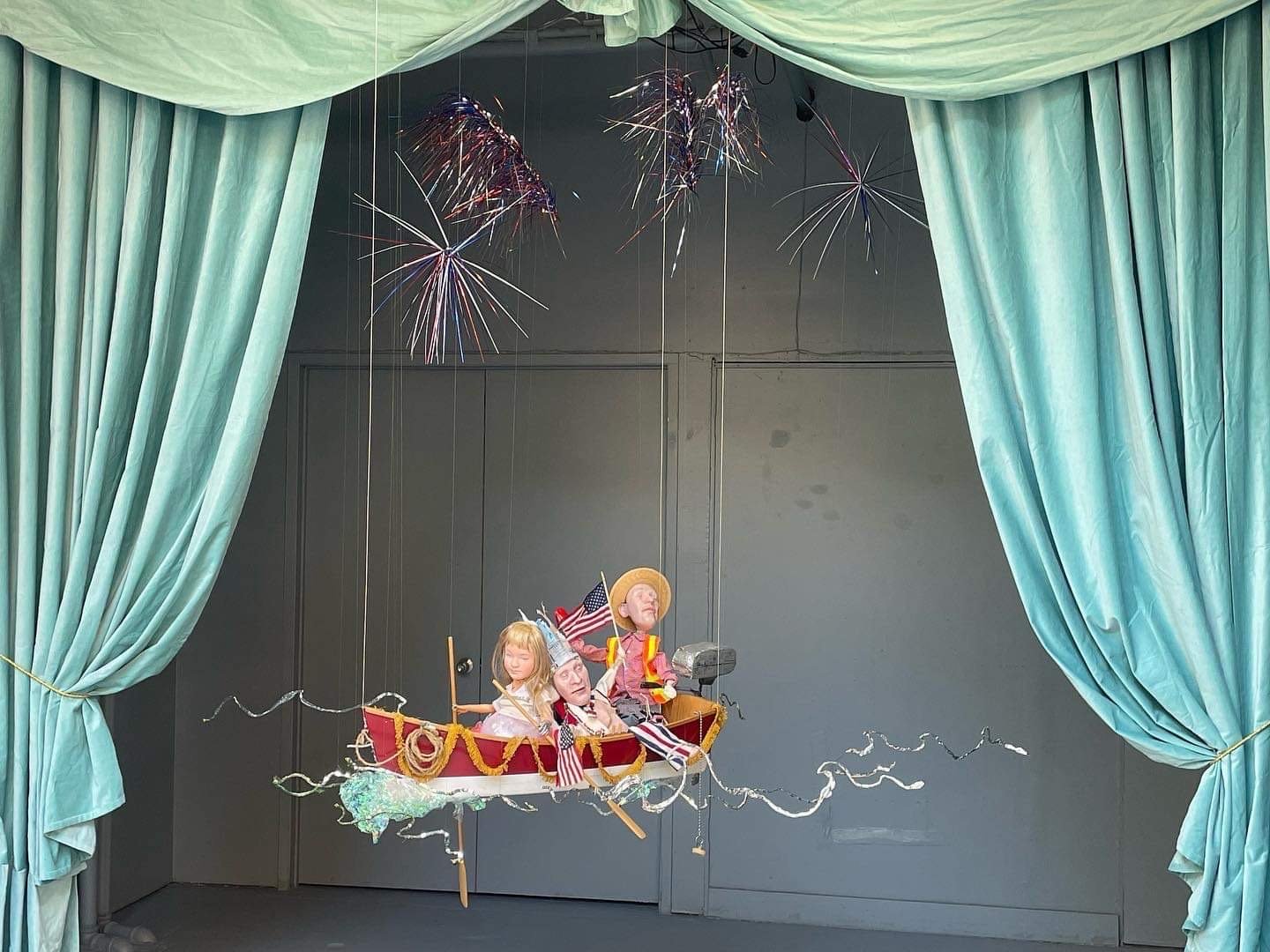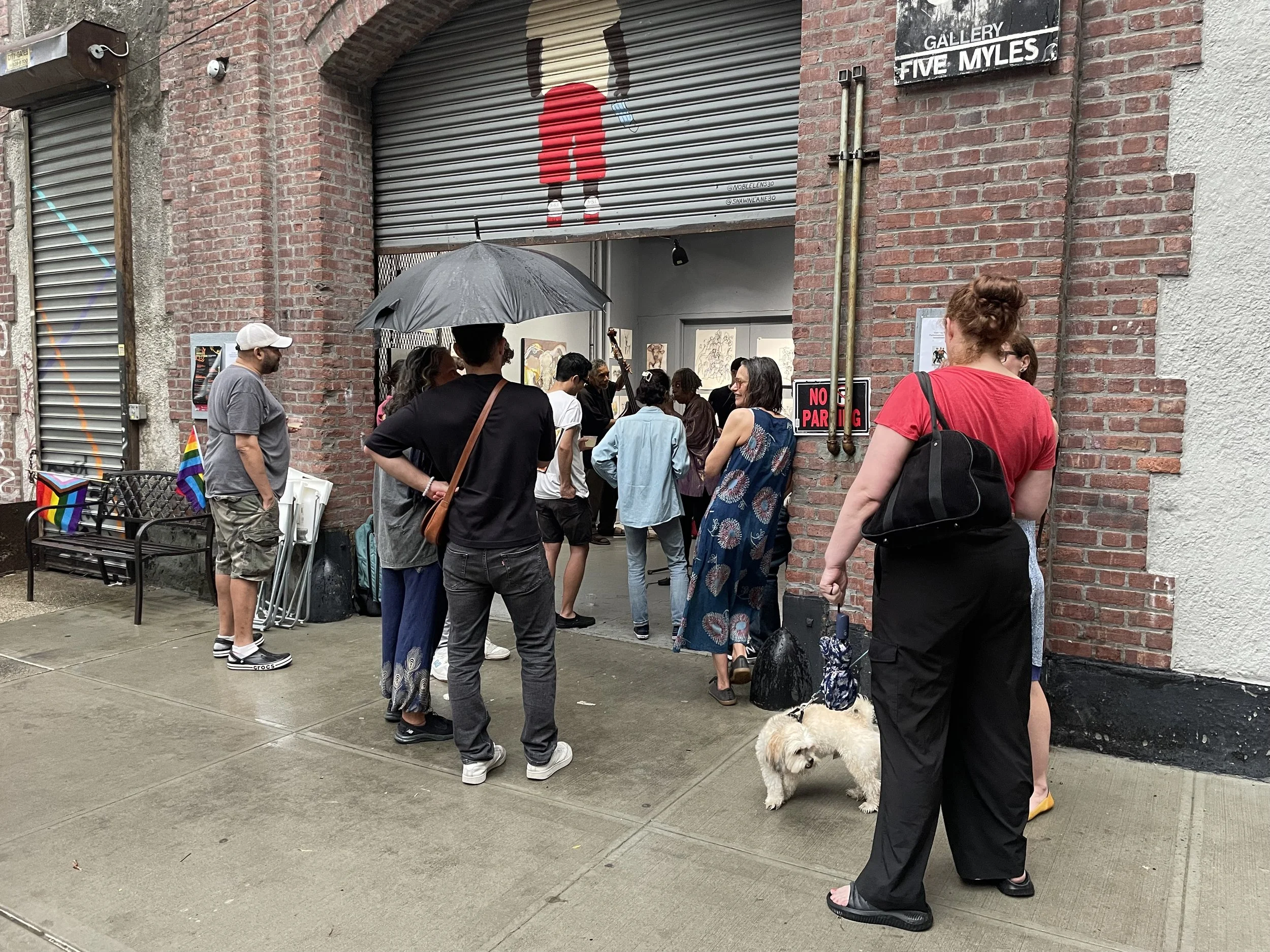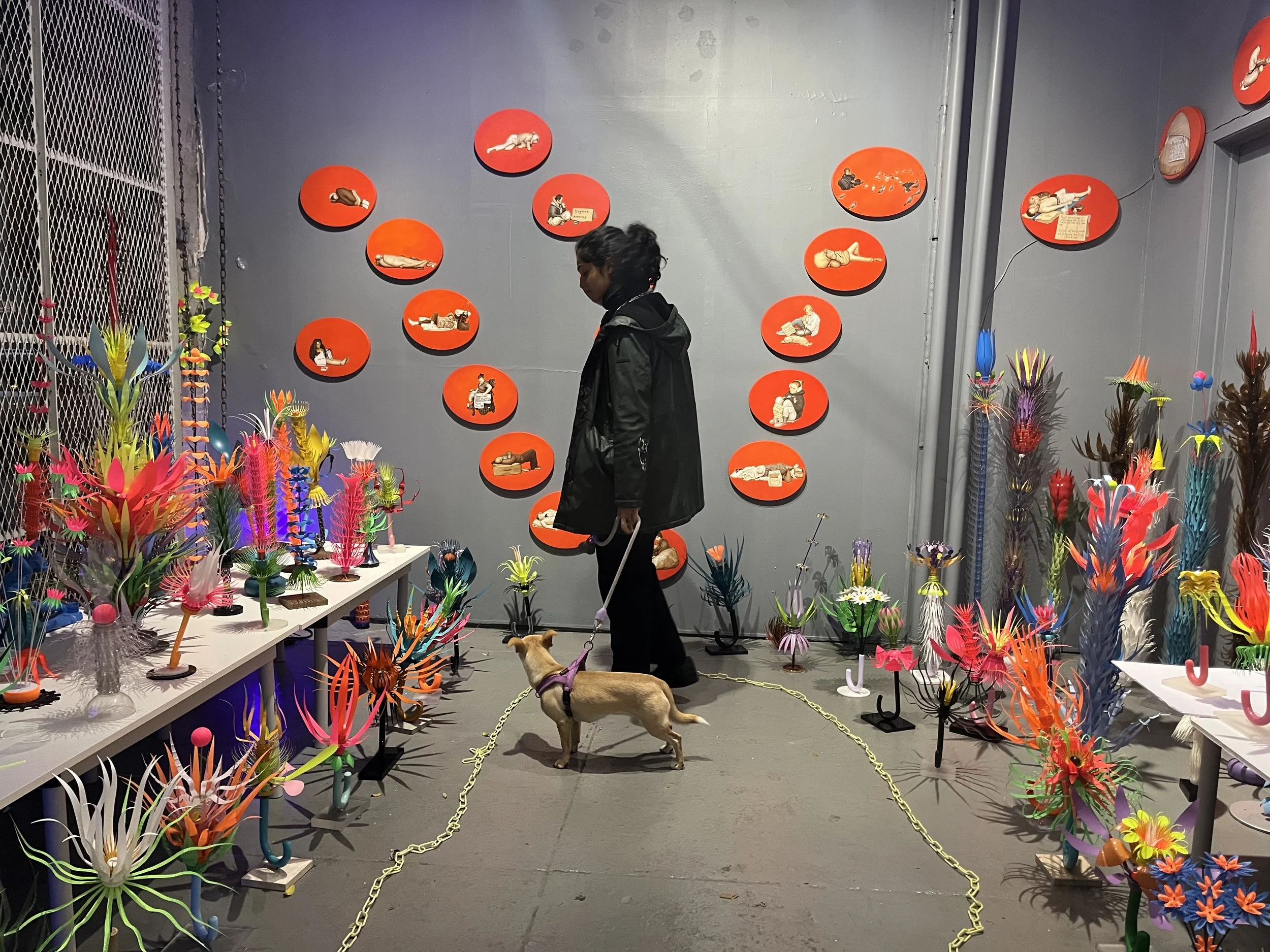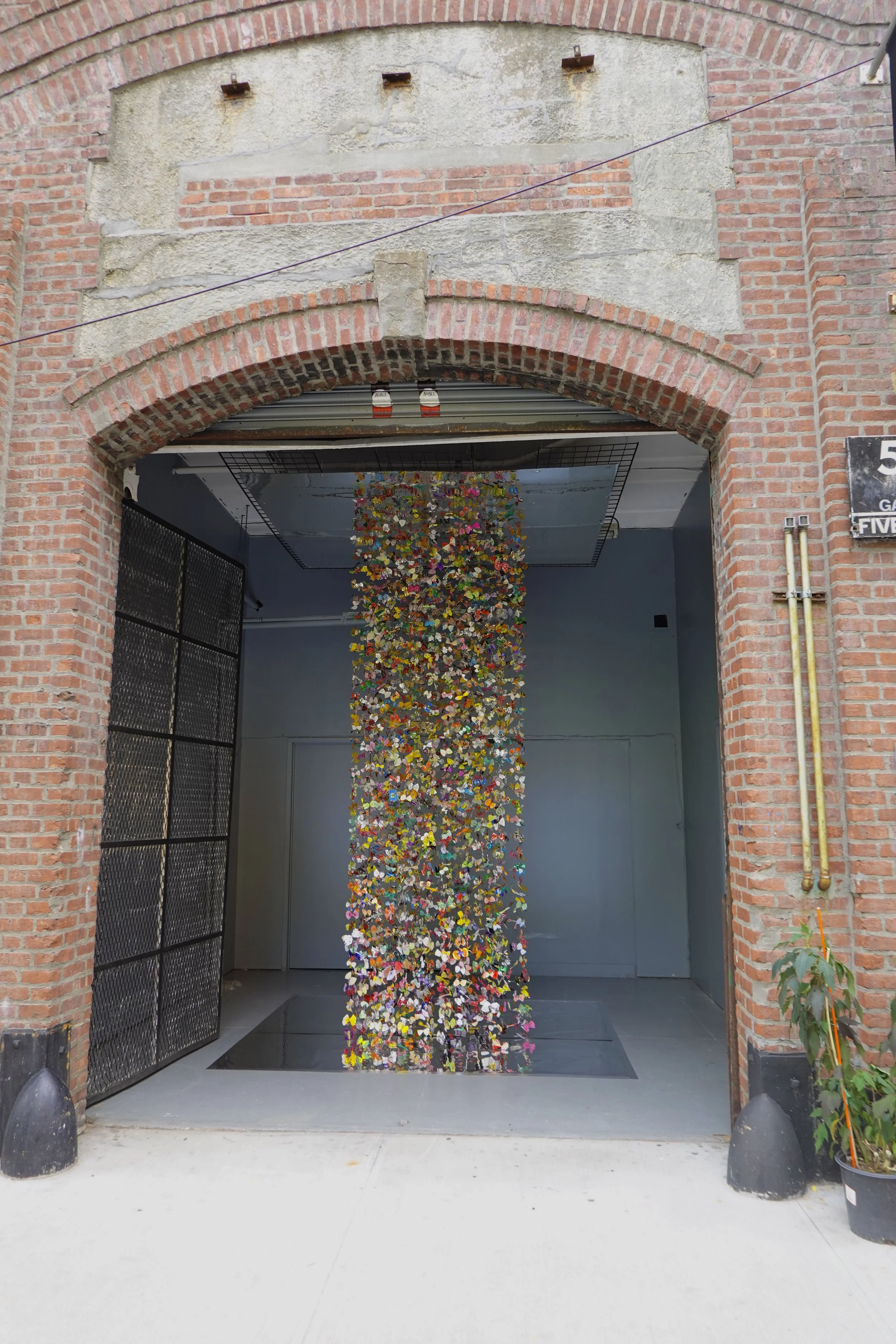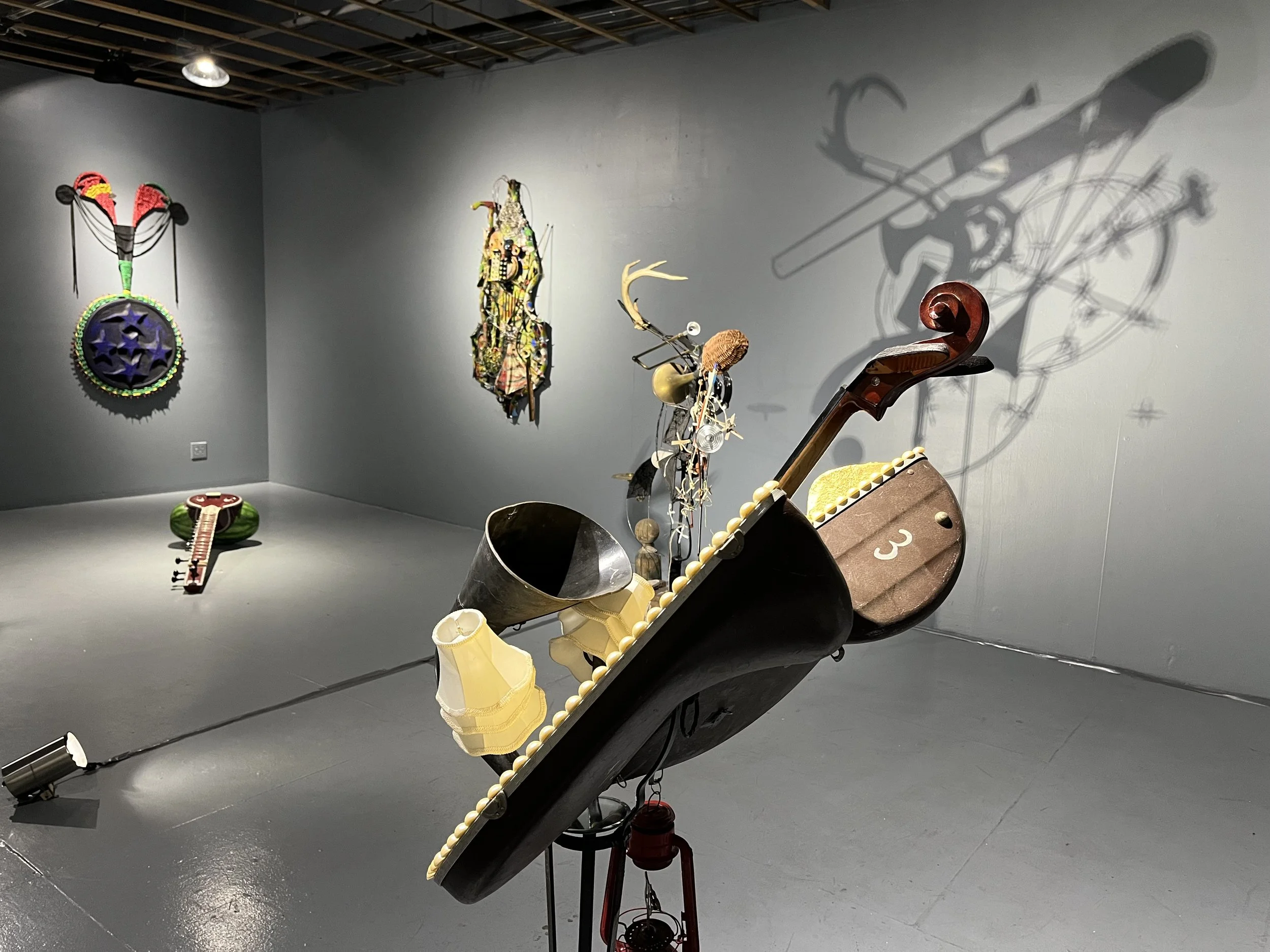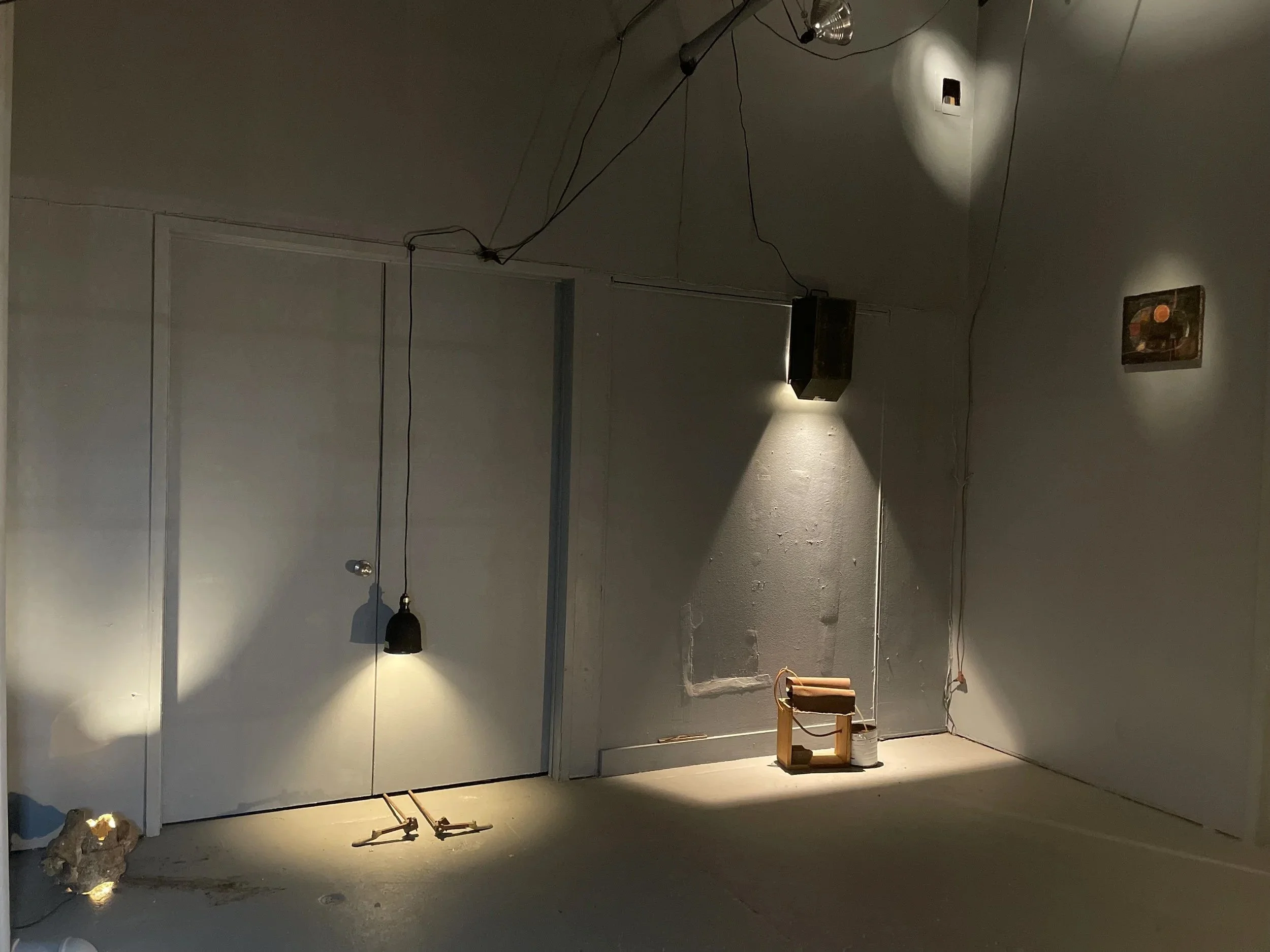
FiveMyles’ mission to present exciting contemporary art and performance to the public established it very quickly as a gathering place. The art we showed came alive because of the web of friendships, neighborhood connections, and collaborations. The gallery existed in a specific time and place: the Crown Heights of the first two decades of the 21 st century. Its founder, Hanne Tierney, made it into a space open to anyone who cared to push its door open and engage with what was shown and performed inside.
Below is a short timeline assembled by Hanne Tierney and edited by Marine Cornuet. It highlights a few milestones in the gallery’s history, but is far from an exhaustive account of everything that took place at FiveMyles over the years. For a full list of shows and to view photographs of the art, please visit the Programs Archive page. To hear a few testimonies of people involved with FiveMyles, click on the Oral History page.
1998-2001: THE BEGINNING
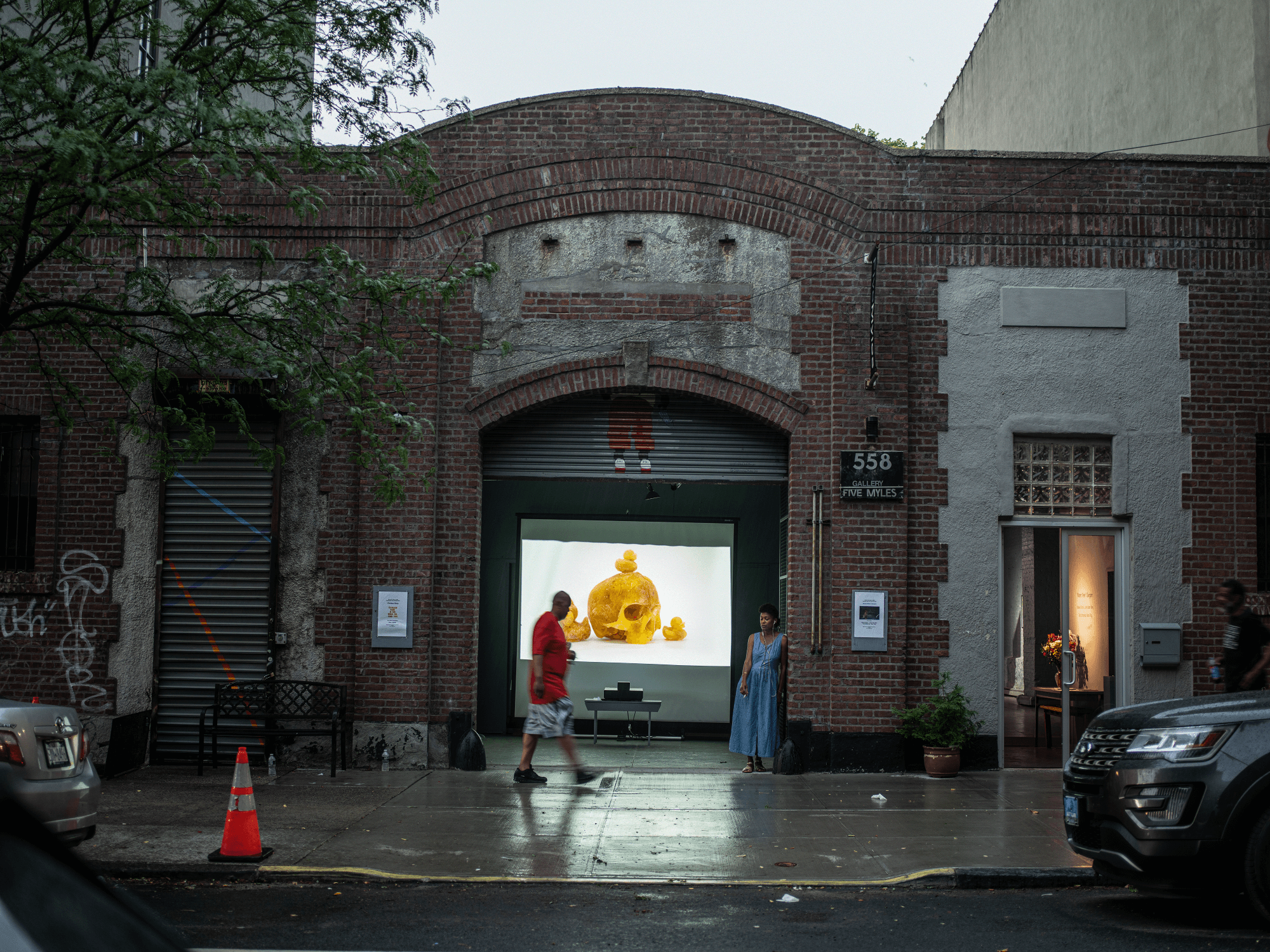
During the 25 years FiveMyles inhabited 558 St. Johns Place in Brooklyn, it established itself as an art venue where well-known, un-known, and emerging artists exhibited and performed their work. Its story begins in 1998, when Edith Ferber, the wife of sculptor Herbert Ferber, asked me to find a space in Brooklyn where Herbert’s large, welded sculptures could be stored, and where I would have space for a new studio as well. The search resulted in the joint the purchase of 558 St. Johns Place, a run-down but solid old garage building of 6.000 sqft, easily large enough to be shared between Herbert and myself.
My half of the building morphed into a gallery and a new studio. Shortly after we acquired the building, the journalist Myles Tierney was killed while reporting on the civil war in Sierra Leone. Since this killing had been widely covered on TV, a neighbor on St. Johns Place realized that Myles was my son, and said: “Why don’t you name the place after him?” And because Myles was the fifth Myles Tierney in a row of generations and proud of it, the building and the gallery it housed simply became FiveMyles.
The street level entrance to the gallery and the fact that the door remained open anytime we were there—including while we were installing shows—made it easy for people to drop in.
And so FiveMyles became part of the neighborhood, with neighbors hosting barbecues and celebrations and enjoying the art, and local artists coming into the gallery and asking for a studio visit or bringing their portfolios.
Quickly, by talking to friends who were artists or ran galleries, I realized that if I wanted to mount exhibitions and support artists, I needed to look for ways to make it financially possible. The answer seemed obvious: FiveMyles needed to become a nonprofit organization with access to federal, state, and foundation funding. I went to the Brooklyn Arts Council to ask how to create a nonprofit, and they pointed to a young man in the back of the room. It turned out to be Nicholas Constantakis, an artist and advisor to the nonprofit community. From that day on, Nicholas helped stir FiveMyles in the right direction. He agreed to be on the Board as soon as the nonprofit was created, and he remained a Board member and our Treasurer until the very end. The Brooklyn Arts Council became FiveMyles’ first funder.
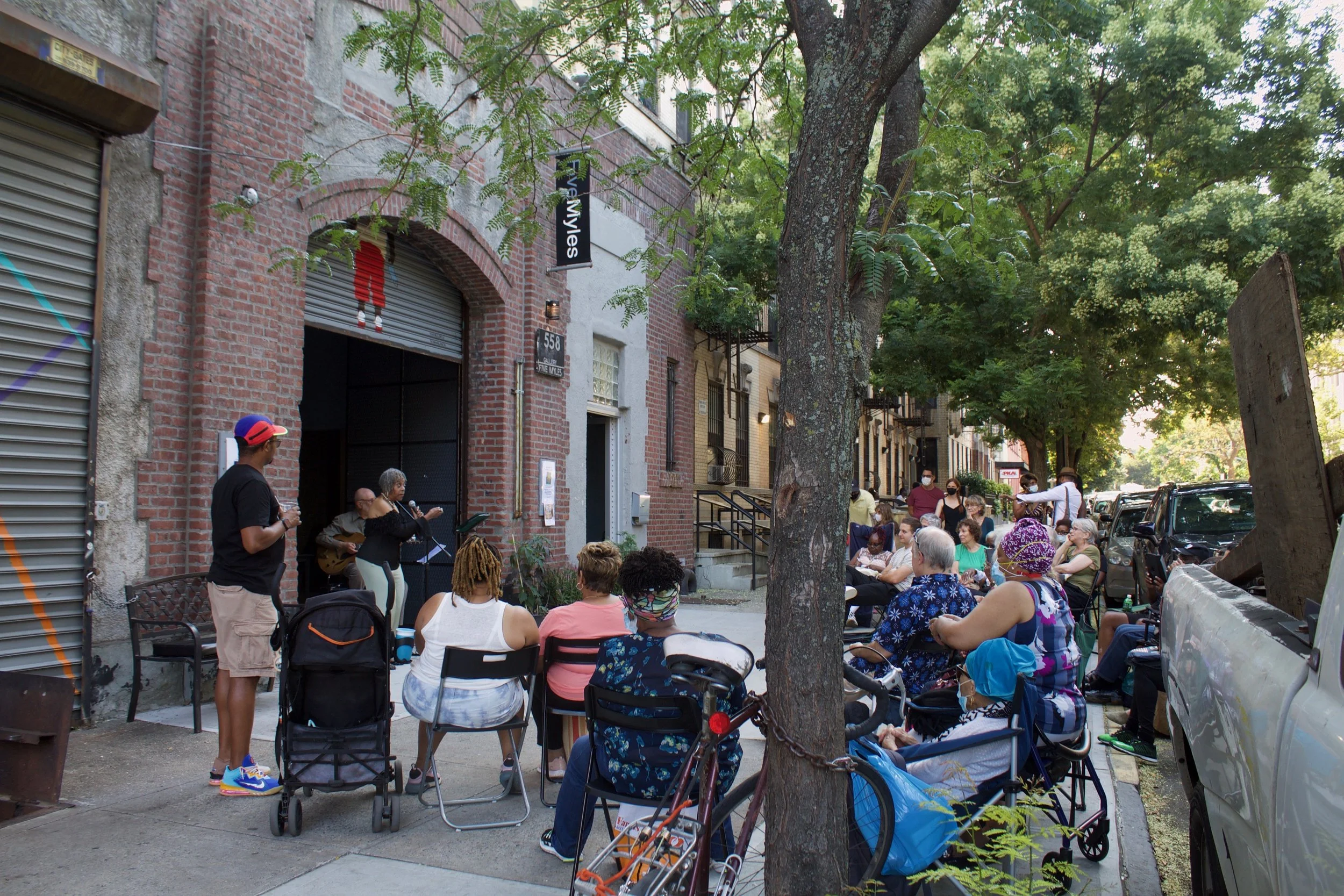
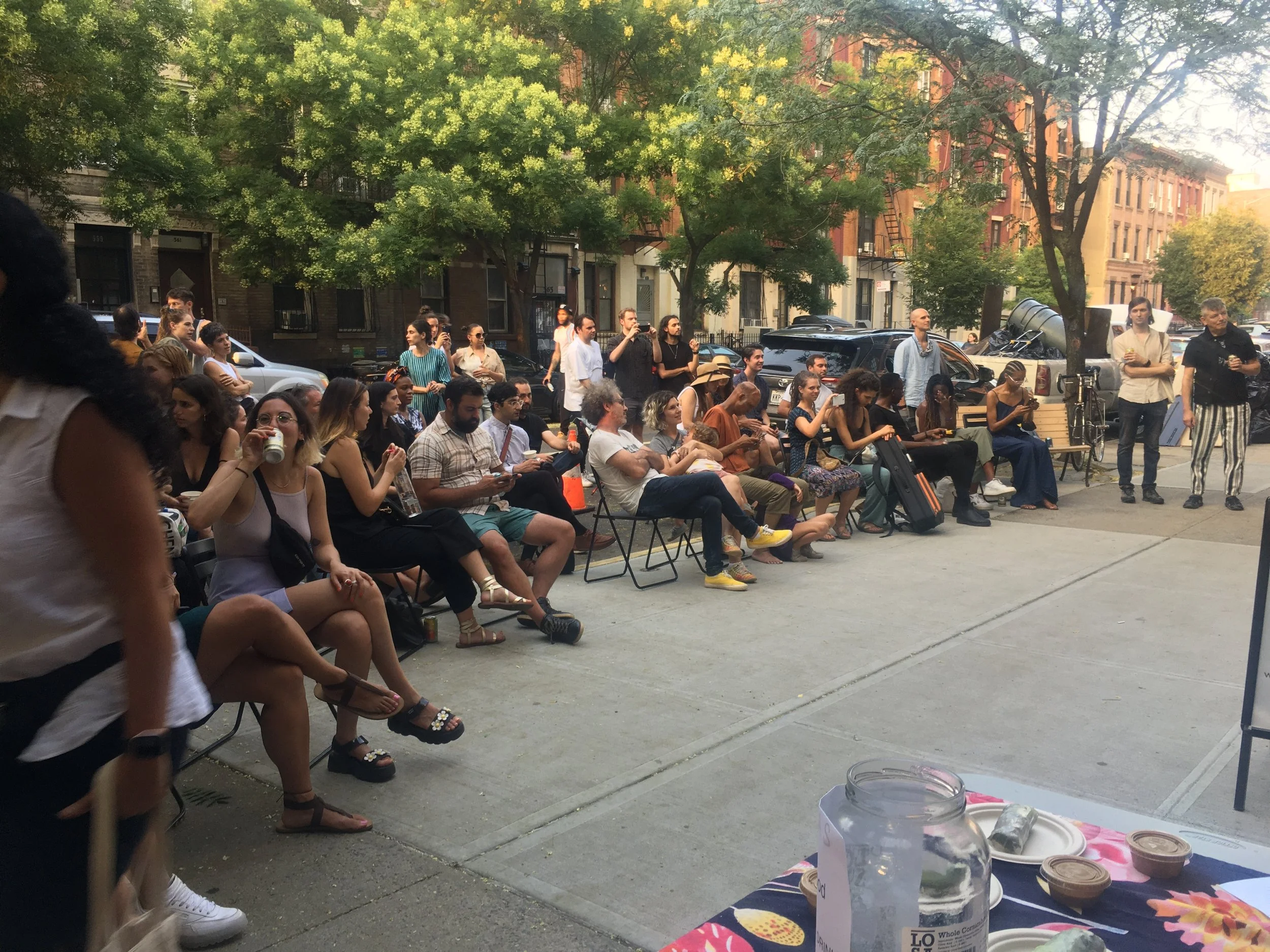
The summer of 1999 saw the first St. Johns Place on Stage happening. Chairs were set up on the sidewalk in front of the building and anyone in the neighborhood who could and wanted to perform was given the space and the mic to do so. The event became a beloved FiveMyles institution for 22 years. The girls practiced their dances in the gallery throughout the summer, and they inevitably became the stars of St. Johns Place on Stage. The Brooklyn Museum invited them to perform during their Hip-Hop Nation: Roots, Rhymes and Rage exhibit, in September of 2000.
2000 was the year that established FiveMyles on the city’s cultural map. Marian Griffiths, the recently retired director of SculptureCenter in Manhattan, curated Confluence, an artist book exhibit. It inaugurated FiveMyles as a gallery where interesting and serious art could be seen. But more importantly, it sealed our mutually trusting relationship with the neighborhood. The books were not exhibited under glass, but lay spread-out on tables; gloves made it possible for everyone to turn and view the pages of the books. The children, in particular, had started to come in to look around, and they handled the books with great care.
That same year, FiveMyles was awarded an OBIE Award for “Celebrating Outstanding Achievement in Off Broadway and Off Off Broadway Theater”. We had presented two performances in the fall of 1999: a Peter Hanke play by Phil Soltanoff and Oscar Wilde’s Salome by myself. The OBIE citation read: “the work…is always masterfully crafted and produced on a shoestring” and “fully engage(s) with folks in the neighborhood.”
In December of 2000, FiveMyles received its first New York Times review by Holland Cotter, for A Ghost in Every Kayak, an exhibition by Richard Nonas. It was followed in 2001 by a second NYT review for the exhibition Fashionably Black, featuring Black Brooklyn-based fashion designers. This fashion show, organized on a Saturday afternoon, starred the teenagers from the Brooklyn Boys and Girls Club; it also received coverage from NY1 TV.
2002-2010: LOCAL ROOTS AND INTERNATIONAL REACH
2002 became the year of architecture at FiveMyles. It opened with an installation by the architect James Rossant titled New York Live, followed by Architecture for One, where seven artists showed their own idea of architecture, including a model for a chapel by Stephen Antonakos and a quilted floor plan of a suburban house by Marcia Hafif. Finally, a postmodern installation entitled Pulpit by the artist/architect Karl Jensen rounded off the year.
In 2003, FiveMyles participated in the citywide Buddhism Project with Liquidation, an installation by Yoko Inoue on the Japanese ritual worship Mizuko Jizo, and with Meditation for the Hand, organized at the Salena Gallery at Long Island University, featuring the work of over a dozen artists. This was the first of many collaborations with the Salena Gallery.
By 2003, the Brooklyn-based Haitian Rara band Djarara had begun practicing at FiveMyles after gallery hours. They also organized a pre-Christmas celebration for the neighborhood. It became our annual Christmas event over the next few years.
In 2004, I went to Nairobi and connected with two curators there, Carol Lees from One Off Gallery and Judy Ogana from the Kuona Trust. We chose 150 works of contemporary art for the exhibition KenyArt. We took the paintings off the frames or stretchers, selected many works on paper, and shipped it all to New York with support from the Ford Foundation in East Africa. Four other Brooklyn art spaces were involved with simultaneous exhibitions scheduled at the Brooklyn Public Library, Kentler International Drawing Space, Salena Gallery, and Welancora Gallery. All the art sold, and nothing needed to be shipped back.
We had also invited James Mbuthia, one of the Kenyan artists, to come to New York later in the Spring for a four-week residency at FiveMyles. He built a Kenyan village chicken coop in the gallery, and we invited twelve Brooklyn artists to create chickens for Mbuthia’s coop. Local children also began to bring in their chickens made out of sticks, stones, and paper, and the installation enjoyed a lot of notoriety.
In 2006, the artist and art writer Carl E. Hazlewood curated Changelings, a beautiful group exhibition of work by nine artists. Over the years, we invited Carl to exhibit his work and curate exhibitions at FiveMyles multiple times. Carl had previously written a review in a magazine titled Art in my Backyard. FiveMyles was indeed Carl’s backyard, since he lived in a building right behind the gallery. For his and our pleasure, he has documented FiveMyles, taking photographs of the building in all seasons for over twenty years.
By 2007, it became very noticeable that neighbors were being pushed out of Crown Heights and that new buildings were going up all over the neighborhood. The Crown Heights Tenant Union held several public meetings at FiveMyles to inform the public of their rights as renters and to give information on where to find advice and support. Together with our neighbors, FiveMyles organized the exhibition There Goes the Neighborhood!
We passed a recording device through the neighborhood and local residents interviewed each other, asking how they felt about these demographic changes taking place. We played the resulting interviews on several radios set up in the gallery that were equipped with headphones. One question came up repeatedly: “Where do they put the people they kick out? We lived next to each other for 20 years, but they never come back and visit.”
Along with the sound installation, we showed Michael Britto’s photographs of the new construction going up. They juxtaposed with his warm and affectionate pictures of beautiful old buildings still standing in Crown Heights. Michael, an artist/photographer who lived in the neighborhood, came to FiveMyles in the very beginning. As a professional photographer, his documenting of the comings and goings at FiveMyles became a valued contribution. Michael also became part of FiveMyles by helping with installing exhibitions, gallery sitting, and introducing local artists to the gallery. Michael died in 2016, and we mourned and missed him; he was a deeply loved and essential part of FiveMyles.
Another essential person who helped run FiveMyles was my son, Shawn Lane. An artist himself, he created beautiful murals for the FiveMyles rolling gate on several occasions. He was also a Crown Heights resident, and often gallery-sat on weekends, welcoming neighbors and visitors to the space. He later became an arts teacher, beloved by his students.
Many striking exhibitions and events took place between 2007 and 2010. In February 2007 FiveMyles collaborated with BAM on a series of performances for BAM’s Brooklyn Next program. Then, Matt Friedman curated the eleven-artist group show There is no Place like Utopia, and Edouard Steinhauer organized an exhibition of work by 21 artists who expressed strong political commentary in the group show Born Again Again. And we collaborated again with the Salena Gallery and Kentler International Drawing Space with the exhibition Native Voices, Contemporary Native Work, co-curated by Raquel Chapa and Deborah Everett.
The FiveMyles SpaceProgram was born in 2008. It offered the FiveMyles space to emerging artists, musicians, and performers for short-term events, exhibitions, and work-in-progress showings in-between scheduled exhibitions and during the summer months, when the gallery would otherwise be empty. By the mid-2010s, FiveMyles was hosting over 20 SpaceProgram happenings per year, and it became an important part of our programming.
In 2009, Fortune Tellers, organized by Kimberly Mayhorn, showed work by seven women artists investigating the role of artists in our society. In 2010, three exhibitions showcased work by and with incarcerated people at Rikers Island. Elizabeth Josephson, who taught art classes at the jail, curated the first exhibit, Turnstile One. It showed the work of 48 incarcerated young men.
None of the artists could see the exhibition, but their friends and families came, as well as many former inmates. Photographs were taken and passed on to those inside, along with the very positive feedback and considerable interest the exhibition created. For Turnstile Two, the second Rikers Island exhibition, Elizabeth Josephson drew life-size figures of 12 young men jailed at Rikers. We projected the drawings onto the gallery walls, and these young men became an immense and moving presence in the space. A few months later, Turnstile Three presented a collaboration between Elizabeth Josephson and a group of incarcerated women. Elizabeth had drawn portraits of the women. Each of the women had written her autobiography across the drawing, giving viewers a glimpse into their stories and experiences.
Finally, 2009 saw the birth of the Crown Heights Film Festival, created by artists Erin Gleason and Pedro Marti. Ran by Erin and Pedro from 2009 to 2013, it was then taken over by FiveMyles until 2024, and took place in the main gallery space every fall. It showed short films by international, national and local film makers, and provided a social forum for viewers and filmmakers. Each year, it gathered a local crowd of neighbors and film lovers for a much-anticipated series of screenings.
2011-2019: A TIME OF CHANGE
It was in 2011 that Régine Roumain, co-founder and director of the Haiti Cultural Exchange (HCX) and Kassandra Khalil, the then Programs Coordinator at HCX, first came to FiveMyles in search of a space to screen the documentary When the Drum is Beating. The screening was a success and was followed by a poetry reading that summer on the FiveMyles sidewalk. We were very happy to work together with Régine and Kassandra. In November, HCX started renting an office space in the back of FiveMyles, and in December, they hosted their first exhibition at the gallery, titled ArtQuake and it doubled as a fundraiser for Haiti, in the wake of the earthquake that hit the island.
Over the years, HCX held their annual Haitian Film Festival at FiveMyles, as well as many other events both in the gallery and on the sidewalk. HCX and FiveMyles hosted joint celebrations and events, including a yearly holiday party for staff, friends, and neighbors.
2012 turned out to be an exciting year of solo exhibitions. Six artists exhibited their work in one-person shows: Musa Hixon, Edouard Steinhauer, Deborah Everett, Veit Stratman, and Mildred Beltre. In 2013, Marine Cornuet came on board as the Programs Manager for FiveMyles. Having two people on staff gave FiveMyles a boost. We were able to organize more events and exhibitions, and spent more time promoting our programs and looking for funding. Thanks to the increase in funding, FiveMyles was finally able to pay artists an artist fee, an important gesture that recognized the work that went into creating and maintaining their artistic practice.
It was also in 2013 that another FiveMyles tradition fell into place. Richie Bama, one of the original Bronx train yards graffiti artists from the 1970s, came to ask to use the space for a long weekend to celebrate a reunion with his former graffiti colleagues. This turned into a yearly weekend of the artists showing their work, playing music, and telling stories of those legendary graffiti outings on the NYC subway.
In 2014, the curator/artist Matt Freedman asked several well-established artists who had shown at SculptureCenter in Manhattan under Marian Griffiths’ directorship, to each invite a younger artist to show their work at FiveMyles in an exhibition entitled For Marian. The exhibition celebrated Marian, who died in 2008, in the only way she would have approved: to push, support, and exhibit emerging artists.
Several significant changes occurred in 2015. That year, we officially inaugurated the Plus/Space. We refurbished, painted gray, and lit the small FiveMyles garage adjoining the main gallery, and turned it into an intimate exhibition space. As long as it wasn’t raining, we left the rolling gate open so that shows could be seen from the street at any time through the large mesh gates.
Thanks to this added space, we were able to double the number of exhibitions we organized each year, and the joint openings held for the main gallery shows and the Plus/Space exhibitions allowed the mingling of different artists, friends, and circles.
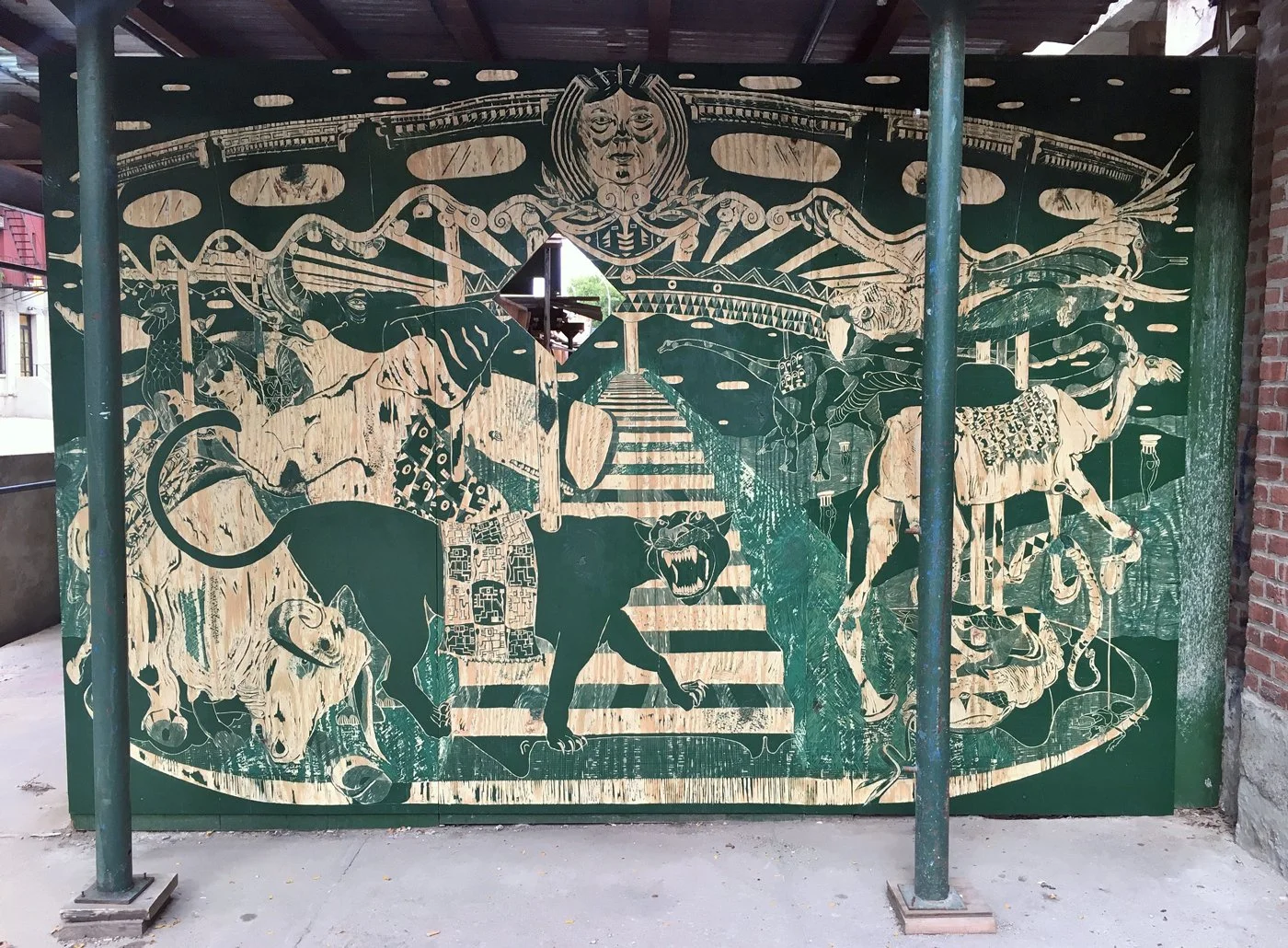
It was also in 2015 that the large garage building next door to FiveMyles was purchased by a real estate developer with the aim of replacing it with a large luxury rental building. A few of us went inside the garage as it was being dismantled and took some farewell photographs. The construction caused disruption and noise on St. Johns Place, and as a response, we started Interlude, a series of rotating exhibitions on the green construction wall.
This project took place from August 2015 to March 2017 and was inaugurated with an engraving by Enrique Figueredo carved into three large wood panels. It figured two people opening a door to a beautiful landscape, and was somewhat ironically titled If I Could Build Anything I Wanted.
In 2016, several Plus/Space exhibitions tackled the theme of “home”. Queer Home – Sweet Home by Tony Whitfield, Fences and Neighbors by Janet Goldner, No Place like Home by Marcus Jahmal, and ominously, No One Gets Out, by Bianca Schreiber.
The Iranian artist Roya Amigh became the first summer resident artist at FiveMyles in 2017. Her three-week residency culminated with her installation In my Sleep I Migrate Back. She kept the door to the gallery open to let people come in while she worked on her installation, and the public enjoyed watching her progress and chatting with her.
In 2018, with the exhibition The Art Life, we were proud to honor and celebrate two lives spent in art by two esteemed, octogenarian artists Otto Neals and Emmett Wigglesworth. Carl Hazlewood curated the exhibition, and WQXR host Terrence McKnight moderated the artist talk. Later that year, the exhibition Standing on the Square showed work by the photography legend Jamel Shabazz and was curated by Myrah Brown Green, while Crown Heights-based artist Nina Meledandri exhibited new paintings with the wonderfully ambiguous title Everything you do is perfect.
2019 marked FiveMyles’ 20th anniversary. The artist Barbara Campisi created a massive, interactive maze-like light installation titled A Sound of Light Appearing around the Bend. Once a week the maze came alive with performance events in and out of the maze. I performed my piece, 18 Stanzas Sung to a Tatar Reed Whistle in the gallery, and William Corwin and Charlotta Kotik offered a wonderful gift to FiveMyles with the exhibition Trajectory: FiveMyles, an exuberant group show celebrating our 20th anniversary.
2020-2025: THE LAST HURRAH
When the COVID-19 pandemic hit in 2020, the gallery went on lockdown from March until June. The Plus/Space exhibition Backroads by Almaz Wilson remained visible through the mesh steel gate from February till the end of May, and it was followed by a Socially-Distanced Exhibition of paintings by Jessica Frederick and a series of other solo exhibitions such as Being Seen, the first exhibition of Ann Rosen’s series of photographs, and an installation by Connie Fu with the idiosyncratic title of Lover / No Reason.
We also created an online program entitled A few minutes with… featuring ten short performances and presentations by artists such as Daonne Huff, Kiowa Hammons, and others who had previously shown their work at FiveMyles. They offered a sense of connection and wonder during a painful time.
That summer, we re-opened our summer artists in residence programming with a collaboration between painter Jo Wood-Brown and dancer Miriam Parker. The artists built the installation Lost Voyage in the gallery space and invited other artists to perform in the installation, broadcasted via live streaming. These performances could be seen through the glass door at FiveMyles, while speakers played the audio onto the sidewalk. Our first outdoor concert of the year, held on August 8, gathered neighbors and passersby for the first time since the beginning of the pandemic. Octogenarian Jazz singer Keisha St. Joan gave a fantastic performance to a highly engaged audience.
2021 began with a laudatory article about FiveMyles by Seph Rodney in the New York Times. Seph had come to the gallery to review the exhibition Four Artists: Two Sculptors, Two Painters, and on researching FiveMyles had decided to turn his article into a more general review of FiveMyles and its history.
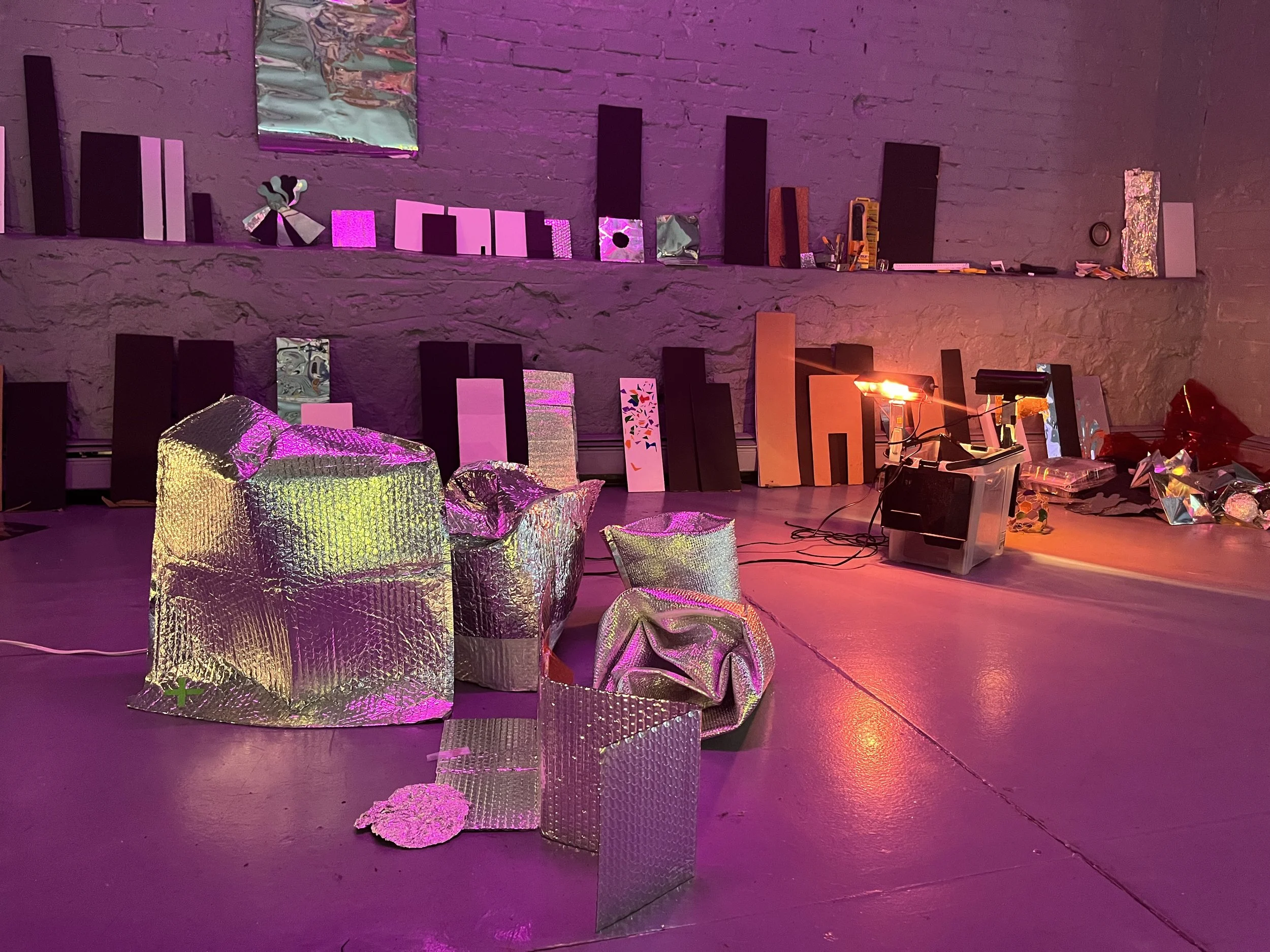
It was also in 2020-2021 that a new generation of artists got involved at FiveMyles. Ruby Lindsey and George Simonds first began working at FiveMyles as Programs Coordinator and art installer, respectively. George, who had shown his kinetic sculptures in the Plus/Space in 2019 in an exhibition entitled Work Machines, curated Tin Foil Has Many Uses, a group show of young artists in the Main Gallery.
Several two-person exhibitions took place at FiveMyles that year. Crosstalk: Still Now showed work by Richard Nonas and Jan Meissner. Richard died later that year. He had always been a wonderful friend to FiveMyles, offering good advice and help. Marine curated O, an elegant exhibition of artist books and paintings by Tammy Nguyen and Thad Higa.
In the Plus/Space, Rob Swainston and Zorawar Sidhu presented Essential Services: 2020 Woodcuts, multi-color woodcut prints that incorporated the graffiti remnants from the 2020-2021 Black Lives Matter protests. Jodie Lyn-Kee-Chow and Rachelle Dang exhibited drawings and an installation in Junkanooacome, a tribute to the early 20th-century, Cuban Chinese painter Wifredo Lam. And in the fall, a collaboration between the sculptor AV Ryan and the light designer Linnaea Tillett—both long-time FiveMyles friends—lit up the Plus/Space with their exhibition If Not Winter.
2022 was a year ripe with solo shows, with exhibitions of work by Larry Weekes, Frank Deceus, Myrah Brown-Greene, and Robert Yasuda. For her summer artist in residence, light artist Tuce Yusak build an enchanting installation of lights and objects in the Plus/Space.
In the fall of 2022 and after nine years at the gallery, Marine left her role at FiveMyles to work at a small independent publisher and pursue her practice as a literary translator. Ruby Lindsey took on the role of Programs Manager, and infused her warmth and welcoming style into the gallery, bringing along many young artist friends, and curating and exhibiting her own work at FiveMyles.
In 2023 Environmental Memorial, an extensive exhibition by Linda Cunningham of works on canvas and sculpture honored its title. Barbara Hatfield and Rudolph Serra, with the exhibition Out in the Open curated by Allyson Spellacy, explored the tradition and deconstruction of outdoor activity. A second two-person exhibition that year showed work by Elisa D’Arrigo and Mildred Beltre. And Cecile Chong and Sophia Ma organized and curated Gathering, presenting work by thirty-three artists belonging to the artists’ collective Asianish. Performances took place throughout this high-spirited exhibition.
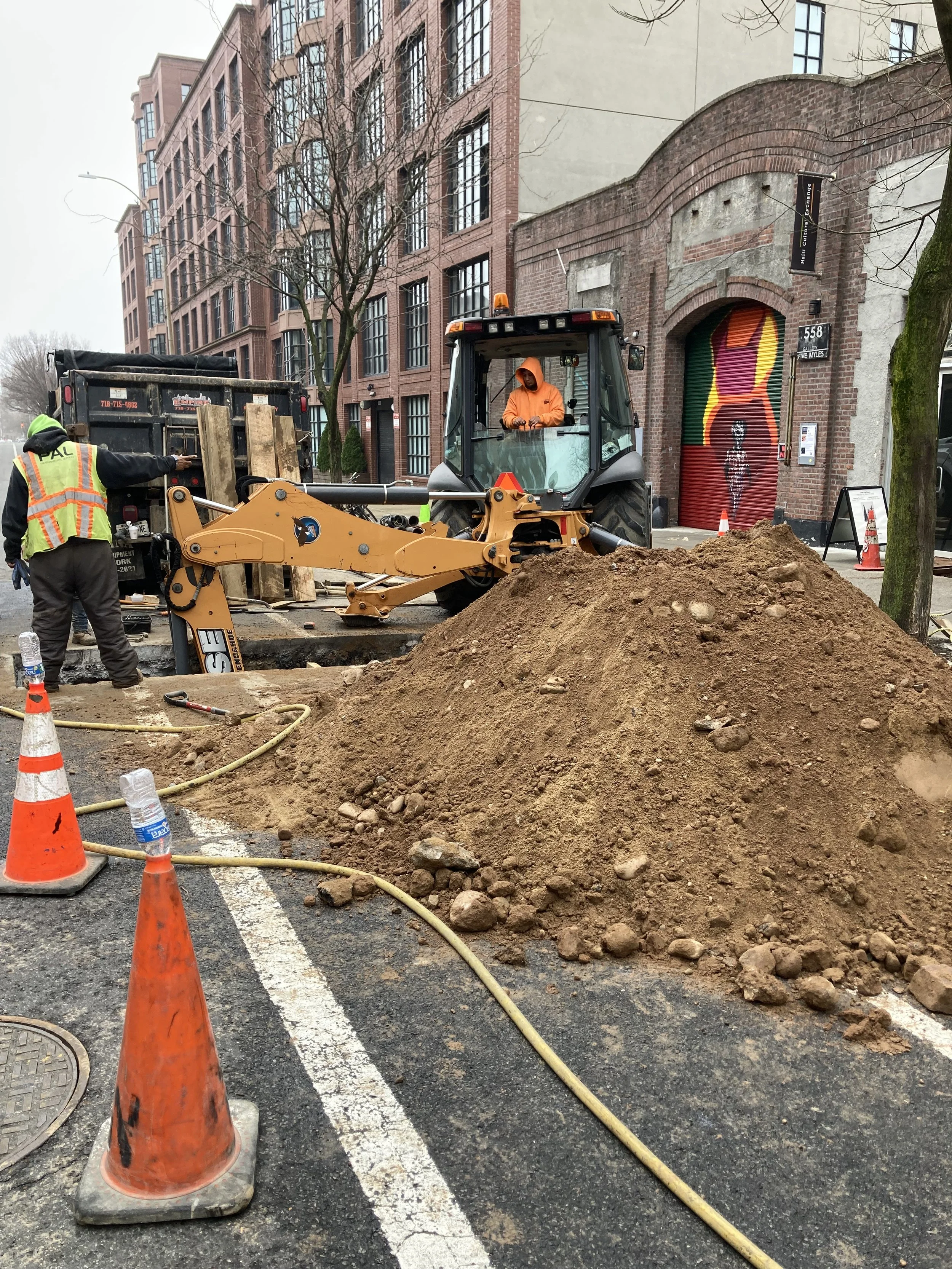
In 2024, we began making plans to close down FiveMyles. The roof leaked and needed major repairs, and a sewage pipe collapsed under the sidewalk and had to be replaced. It became clear that FiveMyles could not afford the upkeep of the building. We decided to scale down our programming, and opened the back studio for FiveMyles performances and events. From the summer of 2024 to July 2025, 24 performance events took place by established and unknown poets, musicians, theater artists, and dancers, who quite literally handed the space over to each other that year.
In the spring of 2024, we organized the last FiveMyles exhibition in the main gallery space. Behind the Scenes showcased work by the nine artists who had helped run FiveMyles for the past 25 years.
In July 2024, HCX began renting the main gallery with a one-year lease, starting off with an exhibition of work by artists from the Haitian diaspora. In the Plus/Space the public could still see FiveMyles exhibitions 24 hours/day, such as Black Girl Magic by Louella Jones, Mas! Pan! Calypso!, Pat Nurse’ hand-made, larger than life carnival costumes, and Juliet Martin’s fiber works.
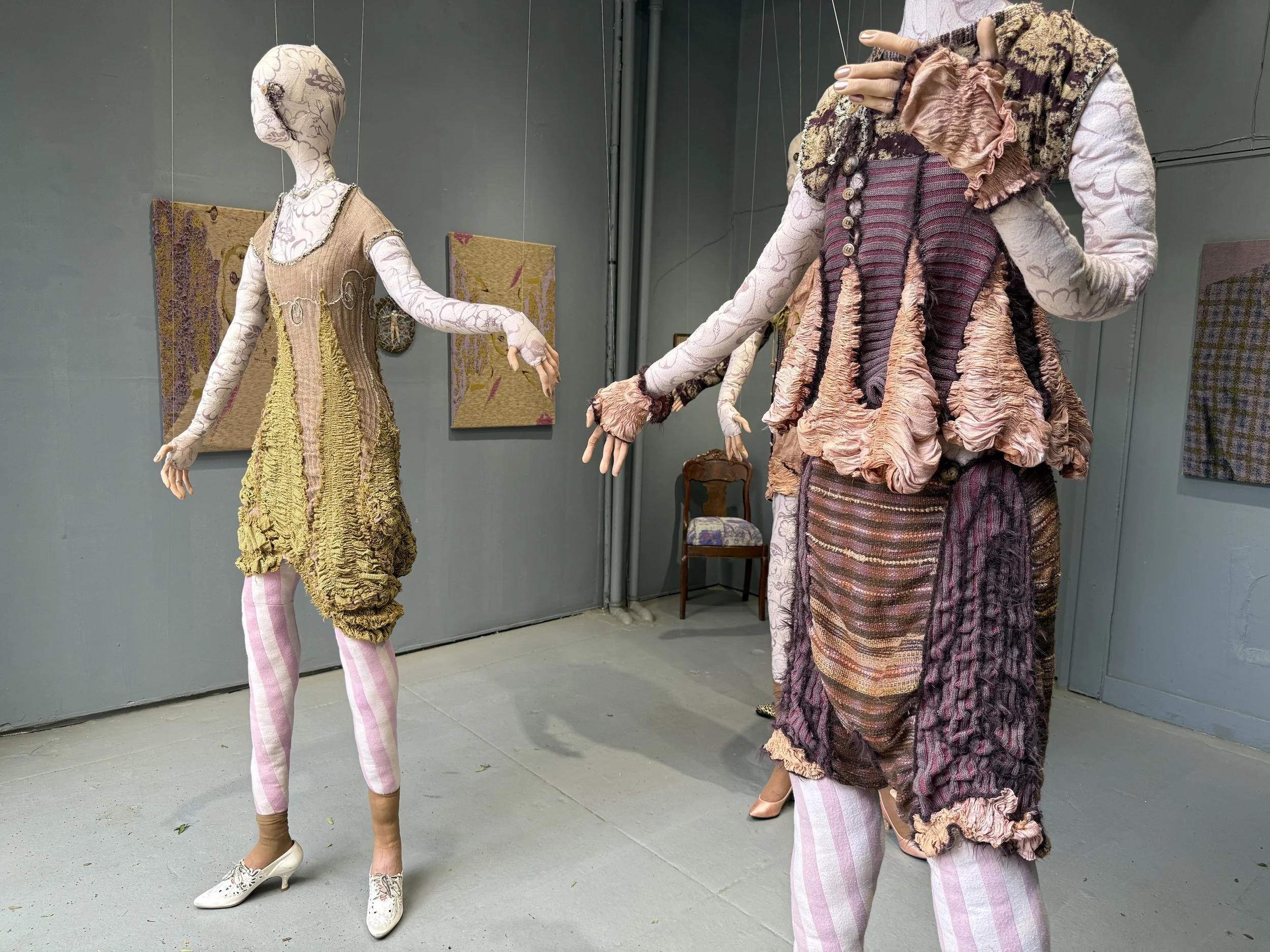
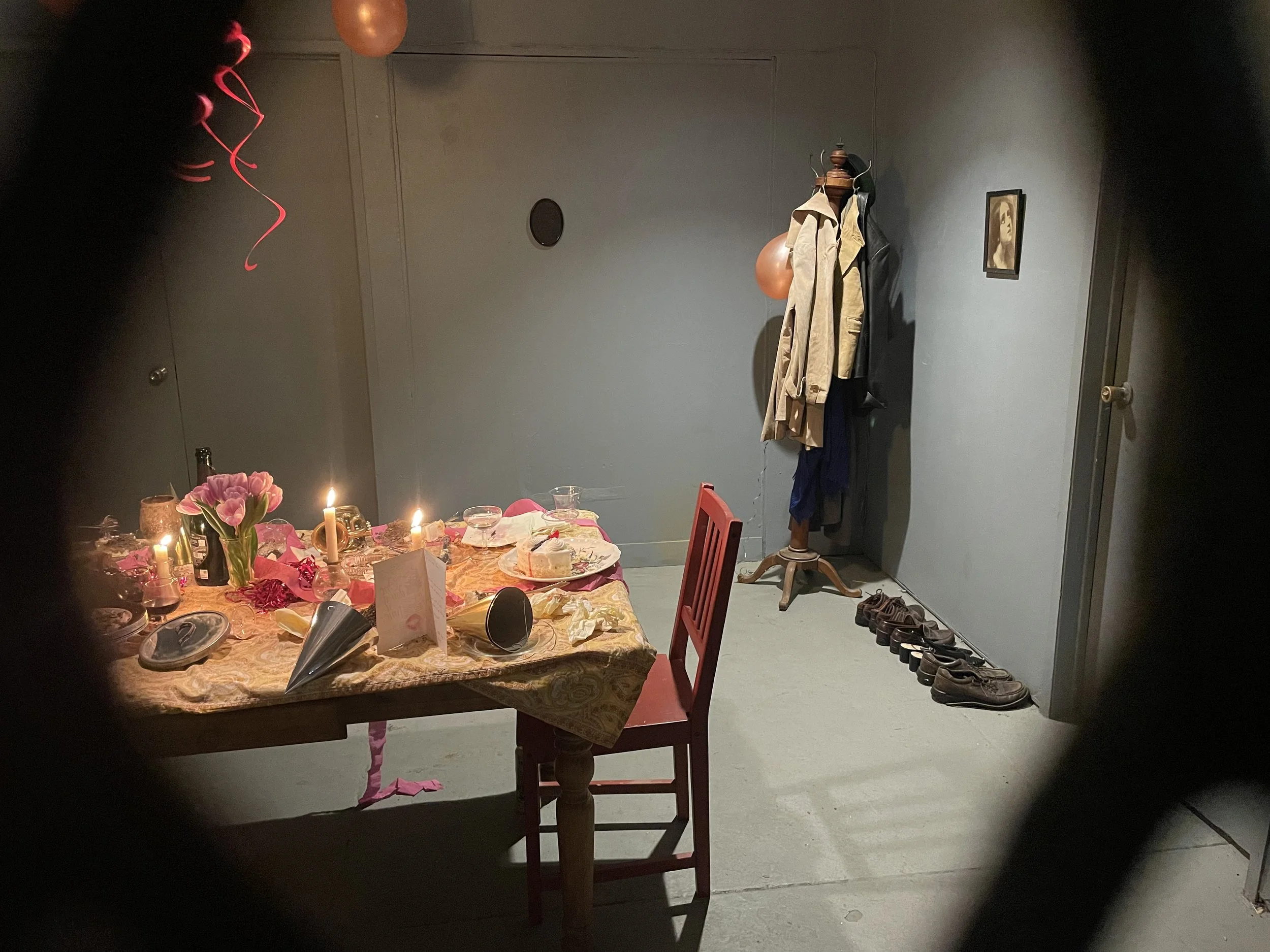
In 2025 we continued to exhibit in the Plus/Space with an installation by Ruby Lindsey titled Apt 3B, inspired by film noir and Alfred Hitchcock, Make my Circle Just, work from the last ten years by AV Ryan, and Entanglement, an exhibit of large, life-size dolls by Lizzy Finn.
In July of 2025, after a series of heartfelt celebrations that gathered old and new FiveMyles artists and staff, neighbors, and our friends at HCX, FiveMyles officially closed down. The building changed ownership in 2025, and in its place, a high-rise was built, in 2026.